
How much do solar panels cost in the UK?
Energy prices continue to rise, and homeowners are looking at solar panels as a solution to taking back control of their energy bills. To know exactly how much solar panels cost, use our free estimate tool!


Average UK Solar Panel Cost (2026)
For a typical UK household, solar panels cost around £6000 – £8000. This will get you a 4-6 kW system, fully installed and fit for purpose. If you are looking to add battery storage, you can add £2000 – £6000, depending on the capacity and how your battery is connected to your system.
In fact, your solar panel cost will depend on a lot of factors. These include your roof size and complexity, your installer’s rate and the quality of the equipment you choose!
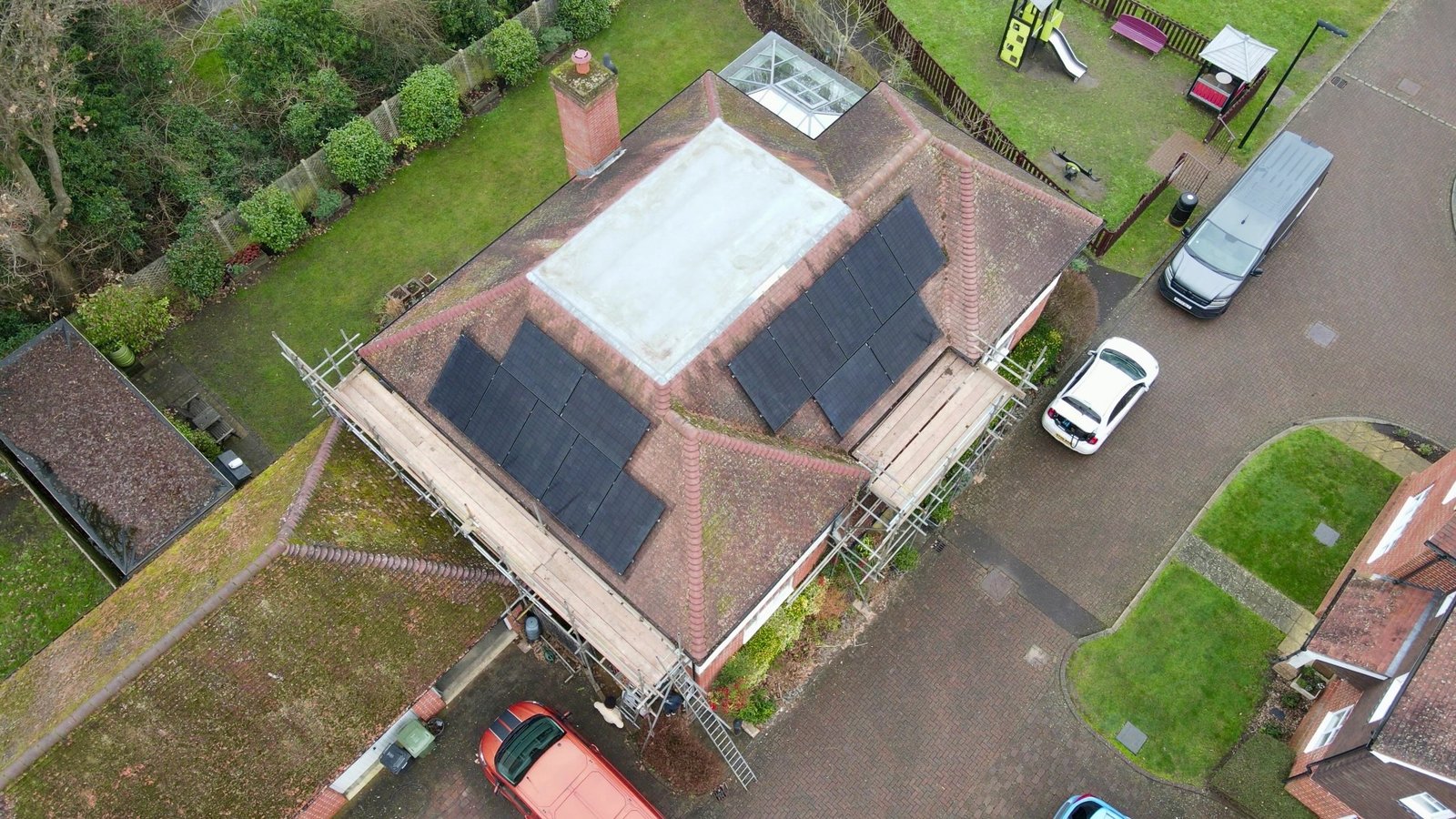
This table provides a guide on the average solar panel cost in the UK for solar panels and battery systems of various sizes.
| System size (kWp) | Typical Cost (UK) | With Small battery (5kWh) | With Large battery (10kWh) |
|---|---|---|---|
| 2-3 kWp | £2800 - £3300 | £4700 - £5500 | £6100 - £7100 |
| 4-5 kWp | £4400 - £5400 | £5900 - £7200 | £7300 - £9000 |
| 6-7 kWp | £6300 - £7500 | £7800 - £9300 | £9300 - £11200 |
These system prices assume a mid-range system with all the panels installed on a single roof orientation. If you have a more complex layout, want a high-end system, or require additional electrical or roof work then you will likely need to pay more.
What Drives solar installation cost?
Several factors determine just how much your solar panels cost. Here, we will give you a breakdown of each so that you know what you can expect to pay for a solar installation on your home.
What type of solar panel is best for you?
The type of solar panel you pick can change the cost that you pay. Most installations now use variations of monocrystalline panels, so we will just focus on those.
4 factors affect how much solar panels cost:
- Panel Efficiency
- Panel Warranty (product and performance)
- Panel output (rating)
- Panel Aesthetics
Panel Efficiency vs Panel Output
There are a few main things to remember when picking a solar panel. First is that even if a solar panel has a higher output, it might not be more efficient and could just be bigger. The quality of a solar panel is mainly determined by its efficiency. Therefore, if you want the best solar panels, you want to look at their efficiency rather than maximum output.
Performance VS Product Warranties
An indication of the quality of your solar panels is the product and performance warranty, which will affect the cost you pay. Typically, the quality of the solar panel is indicated by the performance warranties, and specifically by the expected performance at the end of the warranty. If a solar panel guarantees high output (90%+) after 25 years, then you are looking at a premium panel. The product warranty is more related to its target market. A domestic panel will normally have a 25-year warranty to match historical mortgage lengths, while commercial panels have shorter warranties of 15-years.
Solar Panel Aesthetics
Does your roof affect how much solar panels cost?
Your roof covering and the complexity of your roof can affect the cost of your installation for a few reasons. Most of these are pretty self-explanatory, but let’s have a look at them.
Roof factors affecting cost:
- The type of roof covering you have (tiles vs slates)
- The type of mounting system
- Number of roof orientations you use.
Type of Roof Covering:
Whether you have slate, concrete or rosemary tiles will affect the cost of your installation. Typically, the mounting systems will be fairly similar between all of these, so what causes the price difference between them? The answer is the time it takes to install them. Slates are much more fragile than concrete tiles and, therefore, more caution needs to be taken when working with them. Additionally, slate tiles are nailed into place, whereas other roof coverings rest on the battons making them much easier to move about. As we all know, time is money, so a more fragile roof covering will mean a more expensive installation.
Your Mounting system:
The price of your installation will be heavily affected by whether you are looking for an on-roof system, in-roof system or flat roof system. An on-roof system is the cheapest and most common type of mounting system. They are called on-roof because the panels are mounted on rails around 100-150mm away from the surface of the roof.
An in-roof system involves much more work when being installed retrospectively. They offer a much better finish with the panels being mounted directly onto the roof before being tiled around. However, if you want this type of system, then be prepared to pay more. There is significant additional labour to remove the tiles where the panels are installed, and then tile around the panels, so it might be worth avoiding unless you are having the roof retiled.
Finally, flat roof systems come in a variety of types. Although they are fairly simple and quick to install, the cost of the equipment increases the cost of the installation.
How many roof spaces are you using?
Which system upgrades are worth it?
There are several optional extras available to upgrade your system, and the ones you choose to go for will affect your total installation cost. So which extras are worth considering?
Bird protection
Most installations now include some form of bird protection. This is because the simplest type (black wire mesh) is cheap, and the pain of having birds nesting under your panels is great.
Birds can damage panels, mess with wiring and cause a general mess, so it is often way better to get ahead of this by installing some protection when you have your panels installed. The cost will depend on the type you go for, the size and the number of solar arrays, as well as the complexity of their layout. Realistically, you should expect to pay £150-£350 for simple bird mesh protection.
Voltage Optimisers
For most systems, voltage optimisers are unnecessary, but if you have a shade issue, they could be a great solution. The additional benefit of optimisers is that they can provide panel-level monitoring, which can help you notice and address issues with your system much sooner. Optimisers cost £60-70 per panel.
Home backup systems
For a whole-home backup, you will typically need a gateway device that controls your changeover and acts as your islanding device. However, not all inverter manufacturers offer these. Both types of systems require a fair bit of electrical work to be compliant, so the cost of this needs to be factored in.
An alternative option is using the EPS port that a lot of hybrid inverters have. This port allows you to have a couple of sockets that are only active when the power is out, with the inverter itself acting as your islanding device.
The unexpected costs of solar panels
With every installation, there are always unexpected costs that you only find out about during a site survey. We will outline the key ones to consider here so that you at least have an idea of what to expect and check for.
Additional Electrical Work
Where your fuseboard is located is also a big factor, as cables have to be run from your inverter’s location back to your fuseboard. If you are lucky enough for them to be close by, that is great, but for a lot of people, running cables will be disruptive, and you might need some cosmetic repairs along the cable route. It’s always worth checking if your installer includes these costs in their quote.
Roof Vents
Battery Storage Cost Add-ons
For most installations, the battery is the most expensive item and therefore has a big effect on how much your solar panels cost. This is why making sure you have a properly sized battery is an important step. Typically, you can expect to pay around £2000 for a small 5kWh battery and closer to £6000 for a larger 12kWh battery. Buying too big a battery can mean that you never utilise its full capacity. Whereas too small a battery could mean that you don’t see all the benefits that the battery can provide.
What affects the cost of the battery?
Now, basically, all home batteries use similar Lithium Iron Phosphate (LiFePO4) chemistry, so for most installations, we can ignore chemistry. The key factors that affect cost are:
- Capacity (kWh)
- Smart features
- AC-Coupled or Hybrid connection
Usable Vs Total Capacity
One of the most important factors to look at when picking a battery is whether it’s advertising its usable or total capacity. The usable capacity is what really matters to you, so make sure that you are checking for that! Any additional capacity in the battery is put there by the manufacturer to aid in battery longevity and health, but it can’t be used by your system.
Smart Features
All batteries do the same thing, storing energy for use later, but how much control you have of this will affect the cost you pay. A battery system with additional smart controls and integrations will typically cost you more; however, they might make your user experience better and unlock additional avenues to savings. Although the smart features are actually more to do with the inverter, we generally don’t recommend mixing battery and inverter brands, as you can lose some of the functionality and compatibility.
AC-coupled Vs Hybrid connected
The cost vs the Savings of battery storage
A question you are probably asking is whether the additional cost of battery storage is worth it for you. If you want to know more about how much a battery can actually save you, whether battery storage is financially worth it, or learn what size battery you need, then you are in luck.
We have put together a comprehensive guide covering all these topics so that you can be confident that you are getting the ideal battery for your home.
Are solar panels getting cheaper in the UK?
While global prices for solar panels have been getting cheaper, they are not the only component that determines the cost of your solar installation.
Home batteries are a mainstay of most installations, and their price remains quite high. The increase in home battery usage and electric vehicles does mean that demand for battery materials is high. However, as they become more common, prices might fall as manufacturer efficiencies increase.
In the UK, the cost of skilled labour and electrical components remains high, so it’s unlikely that you’ll get a quality installation if you want to pay a cut price.
See your personalised estimate
Rather than relying on national averages, you can use our solar panel cost calculator to estimate how much a solar PV system will cost for your specific home.
It takes less than 2 minutes and allows you to model a bespoke system for your home. We use real weather data in your area, MCS-style calculation, and you can even see how different energy tariffs affect your savings.